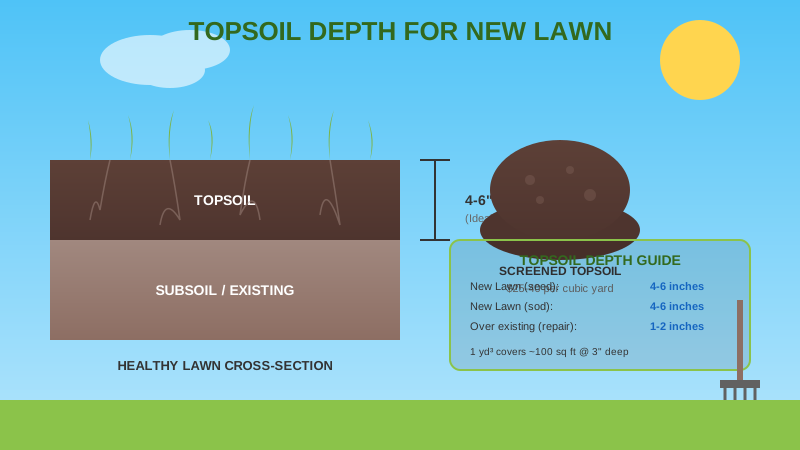
New grass needs enough soil to root and drain well. Too little topsoil leads to weak growth. Too much wastes money and creates grading problems. Pick a depth before you order.
The Short Answer
4-6 inches of topsoil is ideal for most new lawns.
- Minimum: 4 inches
- Optimal: 6 inches
- Maximum practical: 8 inches
More than 8 inches has diminishing returns. The extra cost rarely improves lawn health.
Depth Recommendations by Situation
| Situation | Depth | Why |
|---|---|---|
| New construction (bare soil) | 6 inches | Starting from scratch |
| Over existing poor soil | 4-6 inches | Supplement existing |
| Sod installation | 4 inches | Sod brings its own soil |
| Grass seed (good soil) | 2-3 inches | Amendment only |
| Grass seed (poor soil) | 4-6 inches | Full replacement |
| Heavy clay base | 6 inches | Drainage layer |
| Sandy base | 4 inches | Holds moisture |
How Much Topsoil Do You Need?
Formula
Cubic yards = Length (ft) × Width (ft) × Depth (in) ÷ 324
Quick Reference
| Lawn Size | 4 inches | 6 inches |
|---|---|---|
| 500 sq ft | 6.2 cu yd | 9.3 cu yd |
| 1,000 sq ft | 12.3 cu yd | 18.5 cu yd |
| 2,500 sq ft | 30.9 cu yd | 46.3 cu yd |
| 5,000 sq ft | 61.7 cu yd | 92.6 cu yd |
| 10,000 sq ft | 123.5 cu yd | 185.2 cu yd |
Types of Topsoil
Screened Topsoil
- Debris-free
- Easy to spread
- Best for new lawns
- Cost: $25-40 per cubic yard
Unscreened Topsoil
- Contains rocks and debris
- Harder to work with
- Cheapest option
- Cost: $15-25 per cubic yard
Premium Blended Topsoil
- Mixed with compost
- Ready to use
- Best results
- Cost: $40-60 per cubic yard
What to Avoid
- Fill dirt (no nutrients)
- Unknown sources (may contain weed seeds)
- Wet or clumpy soil (hard to spread)
Grass Type Requirements
Different grasses have different root depths.
| Grass Type | Root Depth | Min. Topsoil |
|---|---|---|
| Kentucky Bluegrass | 6-8 in | 6 inches |
| Tall Fescue | 4-6 in | 4 inches |
| Bermuda | 6+ in | 6 inches |
| Zoysia | 4-6 in | 4 inches |
| Fine Fescue | 3-4 in | 4 inches |
| St. Augustine | 4-6 in | 4 inches |
Deep-rooted grasses handle drought better
Cost Estimates 2025
| Lawn Size | Topsoil (6 in) | Delivery | Total |
|---|---|---|---|
| 1,000 sq ft | $750 | $75 | $825 |
| 2,500 sq ft | $1,850 | $150 | $2,000 |
| 5,000 sq ft | $3,700 | $200 | $3,900 |
| 10,000 sq ft | $7,400 | $300 | $7,700 |
Based on $40/yard premium screened topsoil
Sod vs Seed: Topsoil Differences
For Sod
- 4 inches is enough
- Sod brings 1-2 inches of its own soil
- Prepare level surface
- Soil contact is critical
For Seed
- 4-6 inches recommended
- Seed needs good germination bed
- Top 1 inch should be fine and loose
- Rolling after seeding improves contact
Soil Preparation Steps
1. Test Existing Soil
- Get a soil test ($15-30)
- Check pH (aim for 6.0-7.0)
- Identify deficiencies
2. Remove Debris
- Clear rocks, roots, old grass
- Grade to slope away from structures
- Smooth obvious low spots
3. Add Topsoil
- Spread in 2-inch layers
- Compact lightly between layers
- Final grade with rake
4. Amend if Needed
- Lime for low pH
- Sulfur for high pH
- Starter fertilizer before planting
5. Final Grade
- Slope 1-2% away from house
- Fill low spots
- Remove bumps and debris
Common Mistakes
- Too thin - Grass roots can’t develop
- Too thick - Expensive, settling issues
- Wrong type - Fill dirt has no nutrients
- No grading - Water pools on lawn
- Skipping compaction - Soil settles unevenly
Can You Skip Topsoil?
Sometimes. Consider skipping if:
- Existing soil passes a jar test
- pH is in range (6.0-7.0)
- Soil drains well
- You’re just overseeding
But never skip topsoil on:
- New construction sites
- Heavy clay or pure sand
- Areas with fill dirt
- Compacted soil
Settling Factor
Fresh topsoil settles 10-15% over time.
| Desired Final Depth | Install Depth |
|---|---|
| 4 inches | 4.5 inches |
| 6 inches | 7 inches |
| 8 inches | 9 inches |
Wait 1-2 weeks after spreading before planting. Water to help settle.
Delivery Options
Bulk Delivery
- Minimum: Usually 3-5 yards
- Dumped on driveway or yard
- You spread it
- Most economical for large areas
Bagged Topsoil
- 40-lb bags cover ~0.75 sq ft at 6 inches
- Expensive for large areas
- Good for small patches
Comparison
| Method | Cost per Yard | Best For |
|---|---|---|
| Bulk | $25-50 | 500+ sq ft |
| Bagged | $80-120 | Under 200 sq ft |
Use Our Free Calculator
Our Topsoil Calculator figures out:
- Exact cubic yards needed
- Number of loads
- Cost estimates
- Settling adjustment
For other fill materials, try our Dirt Calculator.
Bottom Line: Most new lawns do well with 4-6 inches of quality topsoil. Add about 15% for settling before you order.
References
- USDA NRCS (soil basics and soil quality): https://www.nrcs.usda.gov/
- USDA Web Soil Survey (local soil information): https://websoilsurvey.nrcs.usda.gov/
How we checked this page
- • Formulas checked against trade and source material
- • Verified against: USDA NRCS Soil Guidelines, Turfgrass Science Standards
- • Price ranges used for planning, not as fixed quotes
- • Examples checked in the live calculator
- • Example quantities and explanations on this page are cross-checked against the matching live calculator on TheSiteMath.
- • This topsoil content is scoped for U.S. planning and estimating workflows, not for stamped engineering or permit approval.
- • We review formulas, material assumptions, and practical steps against category-appropriate references before publishing updates.
- • We refresh pages when calculator logic, supplier assumptions, or pricing guidance materially changes.
- • Readers should confirm final dimensions, structural requirements, and local code obligations with qualified local professionals.