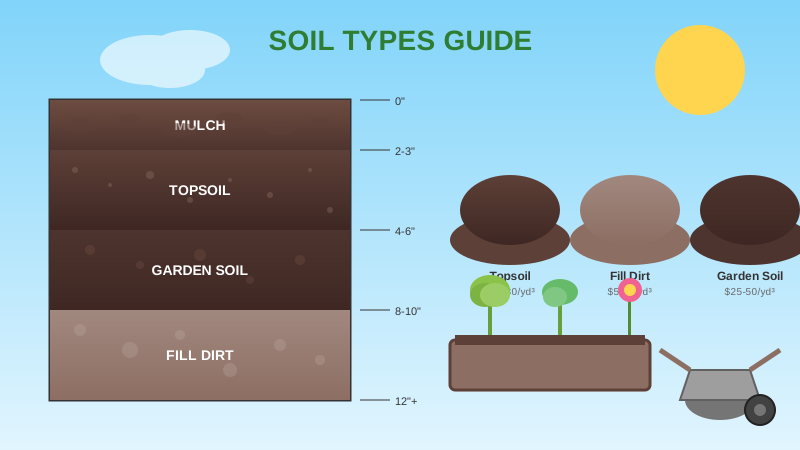
Not all dirt does the same job. Some soil grows grass. Some fills low spots. Some drains better than others. Match the material to the job before you order a load.
The Four Main Types of Landscaping Dirt
Start with the basic material types:
1. Topsoil
What it is: The uppermost 2-8 inches of natural soil, rich in organic matter, microorganisms, and nutrients.
Composition:
- Sand, silt, and clay in varying proportions
- 2-10% organic matter (decomposed plant material)
- Active microbial life
- Natural seed bank (may contain weed seeds)
Key Properties:
- Supports plant growth
- Good moisture retention
- Contains nutrients
- Dark color (from organic content)
Best Uses:
- Establishing new lawns
- Filling low spots in existing lawns
- Creating garden beds
- Grading around foundations
- Topdressing for lawn improvement
2. Fill Dirt
What it is: Subsoil excavated from below the topsoil layer, containing little to no organic matter.
Composition:
- Primarily clay, sand, and rock
- Minimal organic content
- No active microbial life
- Compact and dense
Key Properties:
- Highly stable (doesn’t decompose or settle)
- Compacts well
- Poor for plant growth
- Doesn’t shift over time
Best Uses:
- Filling holes and depressions
- Building up elevation
- Base for concrete, pavers, or driveways
- Backfilling around foundations
- Creating berms (when topped with topsoil)
3. Garden Soil
What it is: A manufactured blend designed specifically for planting, combining topsoil with organic amendments.
Composition:
- Screened topsoil base
- Compost (25-50%)
- Peat moss or coconite
- Sometimes added fertilizers
- pH-adjusted for optimal plant growth
Key Properties:
- Nutrient-rich
- Excellent drainage
- Lightweight and workable
- Premium quality (and price)
Best Uses:
- Vegetable gardens
- Flower beds
- Mixing with native soil
- Container gardening (when combined with perlite)
- Amending poor native soil
4. Mulch
What it is: Organic or inorganic material used to cover soil surface—not a planting medium.
Types:
- Organic: Wood chips, bark, straw, leaves
- Inorganic: Rubber, gravel, landscape fabric
Key Properties:
- Suppresses weeds
- Retains soil moisture
- Regulates soil temperature
- Decomposes and improves soil (organic types)
Best Uses:
- Around trees and shrubs
- Garden bed surfaces
- Playground areas
- Pathway cover
- Erosion control
Comparison Chart: Quick Reference
| Property | Topsoil | Fill Dirt | Garden Soil | Mulch |
|---|---|---|---|---|
| Organic Matter | Medium (2-10%) | Minimal (0-2%) | High (25-50%) | 100% (organic types) |
| Nutrient Content | Moderate | Poor | High | N/A (surface use) |
| Plant Support | Good | Poor | Excellent | N/A |
| Structural Stability | Low | High | Very Low | N/A |
| Drainage | Variable | Poor | Good | Excellent |
| Compaction | Moderate | High | Low | Does not compact |
| Cost | $$ | $ | $$$ | $$ |
2025 Pricing Guide
Understanding current market prices helps you budget accurately and recognize fair quotes.
Bulk Pricing (Per Cubic Yard)
| Material | Price Range | Average | Notes |
|---|---|---|---|
| Fill Dirt | $5-25 | $12 | Cheapest option; sometimes free |
| Unscreened Topsoil | $10-20 | $15 | May contain debris |
| Screened Topsoil | $17-30 | $22 | Sifted, uniform texture |
| Premium Loam | $30-55 | $40 | Lab-tested, optimal blend |
| Garden Soil | $25-50 | $35 | Pre-mixed with compost |
| Compost | $20-45 | $30 | 100% organic matter |
| Mulch (wood) | $20-45 | $30 | Varies by wood type |
| Mulch (colored) | $35-65 | $45 | Dyed for aesthetics |
Bagged Pricing
For small projects, bagged soil from home improvement stores:
| Product | Bag Size | Price Range | Coverage |
|---|---|---|---|
| Topsoil | 40 lb (0.75 cu ft) | $3-6 | ~6 sq ft at 1” depth |
| Garden Soil | 1-2 cu ft | $5-15 | 12-24 sq ft at 1” depth |
| Potting Mix | 1-2 cu ft | $8-20 | Container use |
| Mulch | 2 cu ft | $3-8 | 8 sq ft at 3” depth |
Delivery Costs
| Load Size | Delivery Fee | Total with Material |
|---|---|---|
| 1-5 cu yards | $50-100 | $100-300 |
| 6-10 cu yards | $75-150 | $200-500 |
| 10-15 cu yards (full load) | $100-200 | $300-800 |
Money-Saving Tip: Many suppliers offer free delivery over 10 cubic yards. Order with neighbors to share a truckload.
How Much Do You Need?
Formula
Cubic Yards = (Length × Width × Depth) ÷ 27
All measurements are in feet. Convert depth from inches first:
- 1” depth = 0.083 feet
- 2” depth = 0.167 feet
- 3” depth = 0.25 feet
- 4” depth = 0.333 feet
Coverage Estimates
| Application | Recommended Depth | Cu Yards per 1,000 sq ft |
|---|---|---|
| Topdressing lawn | 0.25-0.5” | 0.8-1.5 |
| New lawn establishment | 2-4” | 6-12 |
| Garden bed preparation | 4-6” | 12-18 |
| Filling low spots | Variable | Calculate individually |
| Mulch around plants | 2-4” | 6-12 |
Quick Coverage Table
| Cubic Yards | Coverage at 2” | Coverage at 4” | Coverage at 6” |
|---|---|---|---|
| 1 | 162 sq ft | 81 sq ft | 54 sq ft |
| 3 | 486 sq ft | 243 sq ft | 162 sq ft |
| 5 | 810 sq ft | 405 sq ft | 270 sq ft |
| 10 | 1,620 sq ft | 810 sq ft | 540 sq ft |
Choosing the Right Material for Your Project
Project: New Lawn Installation
Best Pick: Screened topsoil Depth: 4-6” over compacted subgrade Why It Works: Grass needs nutrients and organic matter to root
Budget Option: Use 3” of fill dirt for bulk grade, then cap it with 3” of topsoil
Project: Vegetable Garden
Best Pick: Garden soil or amended topsoil Depth: 6-12” for most vegetables Why It Works: Vegetables need richer soil and better drainage
Recipe for DIY Garden Soil:
- 60% screened topsoil
- 30% compost
- 10% perlite or coarse sand
Project: Raised Garden Beds
Best Pick: Raised bed soil mix Depth: Full bed height, usually 8-12” Why It Works: Raised beds need strong drainage and high fertility
Recipe for Raised Bed Mix:
- 50% screened topsoil
- 30% compost
- 20% perlite or vermiculite
Project: Filling Holes/Low Spots
Best Pick: Fill dirt for bulk grade, topsoil at the surface Method: Stop 4” short of final grade with fill dirt, then cap with topsoil Why It Works: Fill dirt stays stable. Topsoil supports grass
Project: Driveway or Patio Base
Best Pick: Clean fill dirt or crushed stone Depth: 4-8” compacted base Why It Works: The base stays stable. Organic soil breaks down
Project: Foundation Backfill
Best Pick: Clean fill dirt Depth: As needed to meet grade Why It Works: It settles less and holds less moisture
Important: Do not place topsoil or garden soil against a foundation. Organic material holds water and can attract pests.
Understanding Soil Quality
What Makes “Good” Topsoil?
Good topsoil should have:
- Texture - Crumbly, not sticky or powdery
- Color - Dark enough to show organic content
- Smell - Earthy, not sour or chemical
- Cleanliness - Free of large rocks, roots, and trash
- pH - Around 6.0-7.0 for most plants
Red Flags When Buying Soil
Look for these red flags:
- Very cheap topsoil – Often just screened fill dirt
- Strong odor – May indicate contamination
- Clumpy texture – High clay content
- Visible debris – Poorly screened
- Unknown origin – May contain herbicides or contaminants
Testing Your Soil
For important projects, test the soil first:
- DIY Test Kits: $15-30, tests pH and basic nutrients
- Extension Service: $15-50, full soil analysis
- Private Lab: $50-150, detailed lab report
Layering Strategy: Best of All Worlds
Many projects work better in layers:
Example: New Planting Bed
Layer 3 (Top): 2-3" mulch (moisture retention, weed suppression)
Layer 2 (Middle): 4-6" garden soil (nutrients, drainage)
Layer 1 (Base): 2-4" fill dirt if needed for elevation
Native Soil: Loosened 4-6" deep (integration layer)
Example: Lawn Renovation
Layer 2 (Top): 2-4" screened topsoil (seed bed)
Layer 1 (Base): Fill dirt as needed for grade corrections
Native Soil: Existing lawn or compacted subgrade
Common Mistakes to Avoid
Mistake 1: Using Fill Dirt for Planting
Problem: Plants can’t establish in nutrient-poor subsoil Solution: Always top fill dirt with 4-6” of topsoil for planting
Mistake 2: Using Garden Soil for Filling
Problem: Rich soil settles as organic matter decomposes, creating sinkholes Solution: Use fill dirt for volume, topsoil only for top layer
Mistake 3: Not Accounting for Settlement
Problem: Fresh soil compacts 10-20% over time Solution: Over-fill slightly and water deeply to encourage settling before planting
Mistake 4: Ignoring Drainage
Problem: Heavy clay soil or poor grading causes waterlogging Solution: Amend soil with sand/perlite; ensure positive drainage away from structures
Mistake 5: Buying Without Inspection
Problem: “Topsoil” may be mislabeled fill dirt Solution: Visit the supplier, inspect the pile, and ask about source
Seasonal Considerations
Best Time to Buy
- Spring: Highest demand, highest prices
- Summer: Good availability, moderate prices
- Fall: Best prices, excellent for soil preparation
- Winter: Limited availability in cold climates, best deals where available
Seasonal Projects
| Season | Best Project |
|---|---|
| Early Spring | Lawn renovation, bed prep |
| Late Spring | New plantings with fresh soil |
| Summer | Mulching to retain moisture |
| Fall | Soil amendment, lawn overseeding |
| Winter | Planning and bulk purchasing |
Calculate Your Needs
Do not guess on quantities. Use our Dirt Calculator to size the job. It handles:
- Multiple area shapes
- Various depth requirements
- Conversion between cubic yards and bags
- Cost estimates based on material type
For concrete or masonry work, check the Concrete Calculator.
Bottom Line: Match the material to the job. Use fill dirt for structure, topsoil for lawns and beds, garden soil for planted areas, and mulch for cover.
References
- USDA NRCS (soil basics and soil quality): https://www.nrcs.usda.gov/
- USDA Web Soil Survey (local soil information): https://websoilsurvey.nrcs.usda.gov/
How we checked this page
- • Formulas checked against trade and source material
- • Verified against: Landscape material coverage and delivery references, Supplier tonnage / cubic-yard conversion assumptions, Current U.S. landscaping material pricing benchmarks
- • Price ranges used for planning, not as fixed quotes
- • This landscaping content is scoped for U.S. planning and estimating workflows, not for stamped engineering or permit approval.
- • We review formulas, material assumptions, and practical steps against category-appropriate references before publishing updates.
- • We refresh pages when calculator logic, supplier assumptions, or pricing guidance materially changes.
- • Readers should confirm final dimensions, structural requirements, and local code obligations with qualified local professionals.