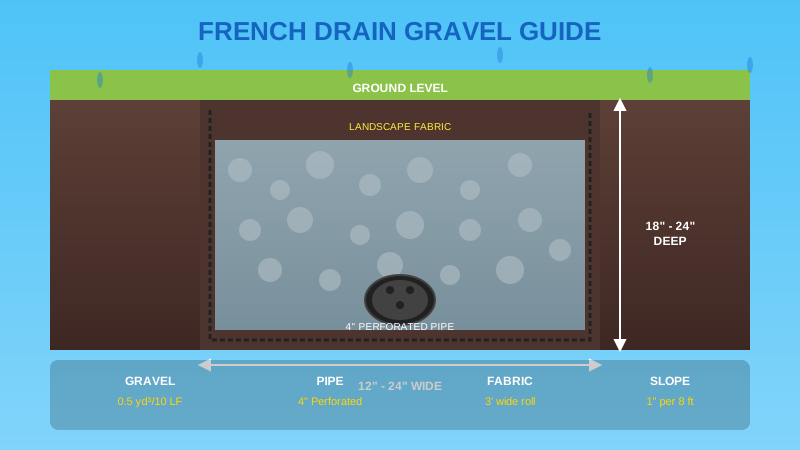
A French drain works because water can move through clean stone and into the pipe. If you skimp on gravel, the system clogs or drains badly. Size the trench and stone before you dig.
French Drain Basics
A French drain has three parts:
- Trench - Usually 6-12 inches wide, 12-24 inches deep
- Perforated pipe - Sits at the bottom
- Drainage gravel - Surrounds the pipe
The gravel does the heavy lifting. It prevents soil from clogging the pipe.
Standard Dimensions
| Drain Type | Width | Depth | Pipe Size |
|---|---|---|---|
| Light duty | 6 in | 12 in | 3 in |
| Standard | 8 in | 18 in | 4 in |
| Heavy duty | 12 in | 24 in | 4-6 in |
The Formula
Gravel (cubic yards) = Length × Width × Depth ÷ 27
All measurements in feet
Example: 50-Foot French Drain
Dimensions:
- Length: 50 feet
- Width: 8 inches (0.67 feet)
- Depth: 18 inches (1.5 feet)
Calculation:
50 × 0.67 × 1.5 = 50.25 cubic feet
50.25 ÷ 27 = 1.86 cubic yards
Add 10% waste: 1.86 × 1.10 = 2.05 cubic yards
Quick Reference Table
| Length | 6” × 12” | 8” × 18” | 12” × 24” |
|---|---|---|---|
| 25 ft | 0.46 cu yd | 0.93 cu yd | 1.85 cu yd |
| 50 ft | 0.93 cu yd | 1.86 cu yd | 3.70 cu yd |
| 75 ft | 1.39 cu yd | 2.78 cu yd | 5.56 cu yd |
| 100 ft | 1.85 cu yd | 3.70 cu yd | 7.41 cu yd |
Includes 10% waste factor
Best Gravel Types
Not all gravel works for drainage. Use these:
#57 Stone (Recommended)
- Size: 3/4 to 1 inch
- Round, washed stone
- Best water flow
- Won’t compact
#4 Stone
- Size: 1.5 to 2.5 inches
- Good for heavy flow
- Leaves larger gaps
- Works around larger pipes
River Rock
- Size: 1 to 3 inches
- Decorative option
- More expensive
- Good for visible drains
What NOT to Use
- Crusher run (compacts, blocks water)
- Pea gravel (too small, shifts)
- Limestone (deteriorates over time)
- Dirty unwashed stone (has fines)
Complete Material List
For 50-foot standard French drain:
| Material | Quantity | Est. Cost |
|---|---|---|
| #57 gravel | 2 tons | $80-100 |
| 4” perforated pipe | 50 feet | $40-60 |
| Landscape fabric | 75 sq ft | $20-30 |
| Pipe fittings | As needed | $10-20 |
| Total | $150-210 |
Gravel Weight
Gravel is often sold by the ton. Here’s the conversion:
| Gravel Type | Weight per Cubic Yard |
|---|---|
| #57 stone | 2,700 lbs (1.35 tons) |
| #4 stone | 2,800 lbs (1.4 tons) |
| River rock | 2,600 lbs (1.3 tons) |
Example: 2 cubic yards of #57 = 2 × 1.35 = 2.7 tons
Landscape Fabric
Always wrap gravel in fabric. It keeps soil out.
Fabric Calculation
Fabric sq ft = Trench Length × (Width + Depth × 2) + 20%
Example: 50-foot drain, 8” wide, 18” deep
50 × (0.67 + 1.5 × 2) = 50 × 3.67 = 183 sq ft
183 × 1.20 = 220 sq ft
Fabric Types
- Non-woven - Best for drainage, prevents soil penetration
- Woven - For heavy loads, less drainage
- Use: Non-woven 4-6 oz weight
Installation Steps
1. Dig Trench
- Slope 1% minimum (1 inch per 8 feet)
- Smooth the bottom
- Remove roots and rocks
2. Lay Fabric
- Line entire trench
- Leave excess on sides
- Overlap seams 6 inches
3. Add Base Gravel
- 2-3 inches of stone
- Level the base
- Check slope with level
4. Install Pipe
- Holes face DOWN
- Connect sections securely
- Extend to outlet point
5. Cover with Gravel
- Fill around and over pipe
- Leave 4-6 inches below grade
- Maintain consistent depth
6. Wrap and Backfill
- Fold fabric over gravel
- Top with soil or decorative stone
- Grade surface away from drain
Slope Requirements
French drains must slope toward the outlet.
| Slope | Inches per 10 Feet |
|---|---|
| 1% (minimum) | 1.2 inches |
| 2% (recommended) | 2.4 inches |
| 3% (steep) | 3.6 inches |
Example: 50-foot drain at 2% slope
- Drop: 50 × 0.02 = 1 foot (12 inches)
Common Mistakes
- Wrong gravel - Crusher run clogs the system
- No fabric - Soil enters and blocks pipe
- Not enough slope - Water sits and backs up
- Holes up - Pipe clogs with sediment
- Too shallow - Surface water bypasses drain
When to Go Bigger
Use 12” wide, 24” deep for:
- High water table areas
- Heavy clay soil
- Large roof runoff
- Areas with standing water
- Basement waterproofing
Cost Comparison
| DIY vs Pro | DIY Cost | Pro Cost |
|---|---|---|
| 50-ft drain | $200-300 | $1,000-2,500 |
| 100-ft drain | $400-600 | $2,000-5,000 |
DIY can save a significant amount versus hiring a crew, but it takes a weekend of hard work.
Use Our Free Calculator
Our Gravel Calculator handles the math:
- Enter trench dimensions
- See cubic yards and tons
- Get cost estimates
- Choose gravel type
For fill dirt and topsoil needs, try our Dirt Calculator.
Key Takeaway: A standard 50-foot French drain needs about 2 cubic yards (2.7 tons) of #57 washed gravel. Use non-woven landscape fabric. Slope at least 1% toward the outlet. Don’t use crusher run or pea gravel.
References
- ICC International Residential Code (IRC) (foundation drainage concepts): https://codes.iccsafe.org/
- OSHA (excavation and trenching safety): https://www.osha.gov/trenching-excavation
How we checked this page
- • Formulas checked against trade and source material
- • Verified against: IRC R405 (Foundation Drainage), ASTM D448 (Grading of Aggregates)
- • Price ranges used for planning, not as fixed quotes
- • Examples checked in the live calculator
- • Example quantities and explanations on this page are cross-checked against the matching live calculator on TheSiteMath.
- • This gravel content is scoped for U.S. planning and estimating workflows, not for stamped engineering or permit approval.
- • We review formulas, material assumptions, and practical steps against category-appropriate references before publishing updates.
- • We refresh pages when calculator logic, supplier assumptions, or pricing guidance materially changes.
- • Readers should confirm final dimensions, structural requirements, and local code obligations with qualified local professionals.